Home / Thirty changes / The shape turned inside out / A week with nothing arranged after the first night
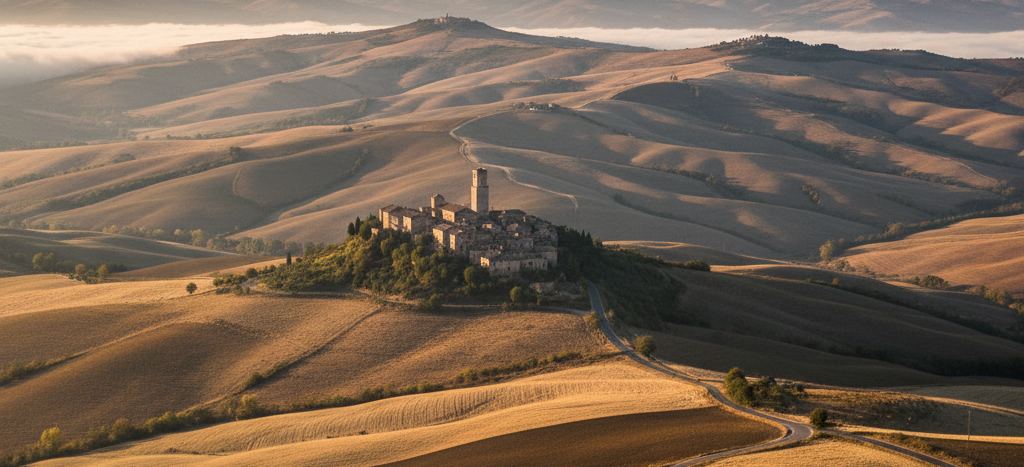
The house shape with its base removed
Nothing after the first bed is held when you book a week in Italy with only the first night arranged
The house shape hands you one bed for eight nights and sends you out from it each morning. Remove the bed and the rest of the week rearranges itself. You can book a week in Italy with only the first night arranged, then settle the next one at about five each afternoon. Seven nights, a hire car, two people, from $1,980.
| What it breaks | one night booked and the rest decided as you go |
|---|---|
| Nights | 7 instead of 8 |
| Places you sleep | decided as you go |
| Car | a hire car, as the shape has it |
| From where you land | 2 hours |
| Season | shoulder |
| People the figure is built on | 2 |
| How far from the shape | the shape turned inside out |
| Two sharing pay | from $1,980 |
The base is the part that goes
In the house shape everything hangs on one room: eight nights in it, unpacked once, two hours from where you land, and a car that takes you out in the morning and brings you back to the same bed. On this week that room is gone after the first night, and nothing is put in its place. There is no second address, no string of rooms held in advance, no route sheet. What stands in for the base is a decision you make every afternoon about where you are sleeping, usually between four and six, usually with the car still warm. One change moves the rest. The car stops being a way out and back and becomes where your luggage lives. Mornings run longer because you are packing them. Evenings run shorter because the last hour of light goes on arriving somewhere instead of sitting still in a place you already know. The map opens, though: with no bed to return to, a road heading the wrong way is not heading the wrong way. The rest of the shape holds. Hire car, shoulder season, two people, first night about two hours from where you land. Seven nights rather than eight, because the last day of an undecided week is mostly the drive back, and a ninth night on this pattern buys more driving rather than more of anywhere.
The ground you would be driving on
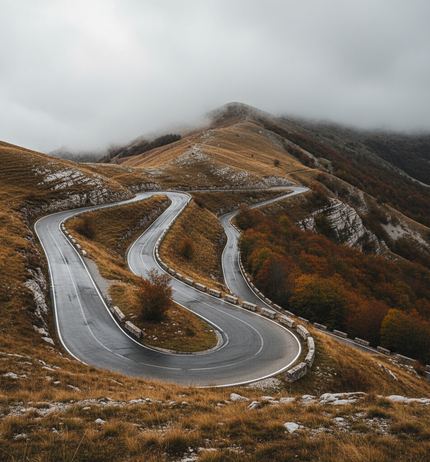
Two hours from Bologna, in practice, means the eastern side of the Apennines: the upper Metauro and Foglia valleys, the hill country behind Urbino, and the top of the Tiber above Sansepolcro. The office places the first night somewhere in that band. After that the ground decides more than you do. Distances read short and drive long. Urbino to Gubbio is about 75 km and takes an hour and forty minutes. Once you are off the valley floors, 40 km/h is a fair average, and the gap between towns worth stopping in runs 20 to 40 km. The SS3 goes down the Furlo gorge, where a tunnel was cut through the limestone in AD 76 under Vespasian; it is 38 m long, you are through it in four seconds, and people stop anyway. Monte Catria stands at 1,701 m and Monte Nerone at 1,525 m, and the roads across their shoulders narrow to a lane and a half with grass along the crown. The towns sit on spurs and you park below them. Urbino's centre is around 485 m and steep enough that there are lifts cut up through the rock from the car parks. Expect stairs, and expect to walk up carrying the day's bag rather than nothing, because the car is now the wardrobe and you will not want to leave much on show in it.
The four o'clock job
Somewhere between four and six each day you stop being a visitor for half an hour and find a bed. In the towns this is quick; there is inventory online and you can hold a room from a car park in ten minutes. In the valleys it is not. Family places with four to eight rooms often carry no online availability at all, and the way to get one is a phone call in Italian at half past four, from a spot where you have signal, which is not everywhere up there. Two other things bite. Historic centres are ringed with limited traffic zones; a camera reads the plate, the notice reaches the hire company months later, the hire company adds its own fee and passes the lot to you. Park outside and walk in. And kitchens keep their own hours: dinner in a small place runs from about half past seven to nine, so arriving in a village at a quarter past nine wanting a room and a meal will usually get you one of the two. The office does the part that can be done in advance. You get the towns that hold rooms late, the valleys that do not, the closing days, and what a room runs by day of the week. It does not make the calls for you. That is the change you are buying.
Shoulder season without a bed booked
Shoulder here means the second half of April into May, or the middle of September into the third week of October. In the Marche hills that gives daytime temperatures of roughly 18 to 23 C at valley level in October, 8 to 12 C at night, a few degrees off that at 900 m, and rain on about one day in three. Fog fills the valleys until nine or ten in the morning and clears from the top down, so the ridge road is open while the road you came up on is still white. Light is the constraint that catches people out. In mid October the sun is off the valley floors by about six, and when the clocks go back on the last Sunday of the month it goes at ten past five. Ninety minutes of daylight has to carry the search, the drive and the arrival. Weather does something particular to a week with no base. With a base, a wet day is a day indoors in a room you already know, or a three hour lunch. Without one, a wet day is still a moving day: packing at nine and driving through cloud with everything you own in the back. The office will tell you which valleys hold cloud and which shed it. It will not promise you a sky.
What the $1,980 is, and what it is not
From $1,980 covers two people for seven nights: the hire car for the week, the first night's room, and the office's work in setting the shape up and briefing you on the ground. It does not cover the six rooms you have not chosen, because those rooms do not exist yet. Nor fuel, tolls, meals or admission to anything. Figures worth carrying in your head for the Marche in shoulder season: a room for two in a family place, 70 to 130 euros with breakfast; dinner, 25 to 35 euros a head with wine; petrol about 1.80 euros a litre, and a small car over the week's 800 to 1,000 km will drink roughly 60 litres. Tolls only if you use the coastal motorway, which on this pattern you mostly will not. No money moves through this office. Each room is settled at the desk where you slept, in euros, on your own card, and the car with the hire desk at the airport. No card details are kept here and no invoice is raised here. What the office earns arrives afterwards from the supplier's end, at a rate the supplier sets, and it does not shift with whichever room you pick on Wednesday. The house shape starts at $2,340 for eight nights with the base included. The office does not rank the two. Which figure suits you turns on how much of a week you want settled in advance, and only you know that.
Second or third trip to Italy, and two quick deciders
It suits two people who decide quickly and agree quickly. The four o'clock job is short if you can both look at a map and say yes; it is long and sour if one of you needs an hour and three options. It suits people who like driving for its own sake, since you will do 800 to 1,000 km of it on roads that ask for attention. It suits a second or third trip to Italy rather than a first, because you already know what a town on a spur looks like and can afford to drive past one. It does not suit anyone who needs to know in advance where they will sleep, and that is not a small group; plenty of well travelled people are in it. It does not suit a hard ceiling on cost, because rooms are priced on the day and a wet Saturday in a town with two places open costs what it costs. It does not suit anyone who wants to see particular things at particular hours, or who is travelling with someone who cannot manage stairs and steep streets with a bag. And it does not suit August, which is not shoulder season, or a week that ends with a ten o'clock check in on the final morning from wherever you happen to have washed up.
Awkward questions about this change
- Will you hold rooms for the other six nights while we make up our minds?
- No. Holding them puts the base back one night at a time, and this is the one shape in the book built without a base. If you want rooms held, that is the house shape, or the house shape run from two bases instead of one, and the office will set either up. What you get here instead is a written sheet before you fly: about thirty places across the band you will be driving in, with phone numbers, the days they close, and what they charge in October. You make the calls.
- Do you arrange our flights?
- No. Getting to Italy and home again is a purchase this office cannot make on your behalf: it has signed with nobody who carries passengers and can issue nothing. Your seats into and out of Bologna are yours to buy and yours to hold. The shape does assume you land late morning or early afternoon, since the first night sits about two hours of driving away and the last useful hour of the day goes on getting to it. Send the office your arrival time once you have it and the first night is placed to match.
- What happens if we cannot find a room one night?
- In shoulder season it is uncommon, and when it goes wrong it usually goes wrong as the wrong room rather than no room: a place 30 km back the way you came, or a plain hotel on the main road outside a larger town at 140 to 160 euros instead of 90. Saturday is the thin night and the week before a public holiday is thinner. What keeps it from biting is starting to look at four rather than six, and treating any town of ten thousand people as a safe stop when the small valleys fill up.
- Is $1,980 what the week costs?
- No, it is what the arranged part costs: the car for seven days, the first night's room, and the office's work. The other six rooms, fuel, tolls, meals and entry to things are yours to pay as you go, on the ground, in euros. Two people spending without much restraint or much extravagance tend to add 900 to 1,300 dollars across the week on top of the figure above. Most of the spread between those two numbers is dinners, and how often you take a room inside a town rather than out of it.
- Could we do this without the car?
- No. Take the car out and there is nothing left of the shape; the whole week depends on being able to leave at nine with everything and be somewhere else by five. The valleys behind Urbino have buses that exist for schoolchildren, two or three a day, none on Sunday, and the villages worth stopping in are largely the ones those buses do not reach. If you would rather not drive, the office would put you in a single town with a station a short walk away and a base for all seven nights, which is a different trip and is priced as one.
Others that move the shape about as far
There is no package on this site that somebody has not already asked for, and the thirty in the book are the requests that came back more than once.
-
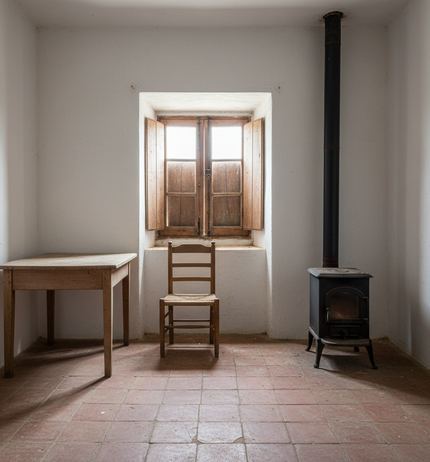
One room, four times in one year
Portugal · one place, four separate weeks, four seasons
from $6,480 two sharing the shape turned inside out -
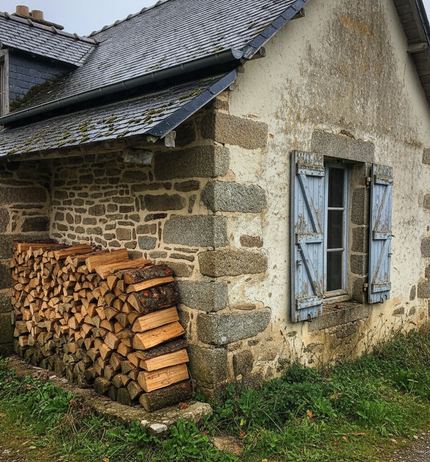
Thirty one nights in one house
France · a month in one place, nothing else booked at all
from $5,960 two sharing the shape turned inside out -
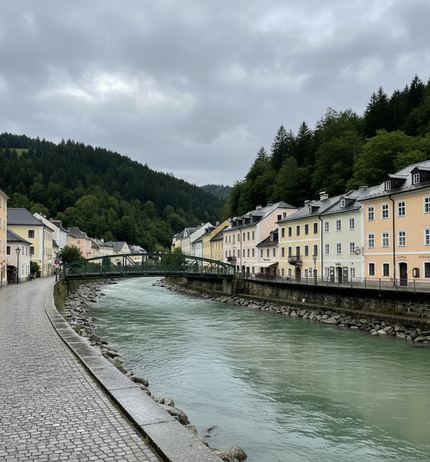
Everything inside two hours of one town
Austria · never more than two hours from the door, all fourteen nights
from $3,290 two sharing the shape turned inside out
Ask for this change in writing
Not a cent moves through here. The supplier bills you under its own name, and what this office earns reaches it from that supplier weeks later.