Home / Thirty changes / One part of the shape changed / The Alentejo plain
The nights count is the part that changes
Five nights instead of eight, and everything else held, when you reserve a five night trip to the Alentejo
Three nights come out of the middle of the week and every other part of the house shape holds. Reserve a five night trip to the Alentejo and you keep the single base, the car, the ninety minutes of motorway from the airport and the shoulder month; what you give up are the three days in which the plain stops being scenery.
| What it breaks | five nights instead of eight |
|---|---|
| Nights | 5 instead of 8 |
| Places you sleep | 1 |
| Car | a hire car, as the shape has it |
| From where you land | 2 hours |
| Season | shoulder |
| People the figure is built on | 2 |
| How far from the shape | one part changed |
| Two sharing pay | from $1,690 |
The three nights that are missing
The house shape runs eight nights. This one runs five. That is the only part broken, and every other part of it holds unchanged. Three nights sounds like a small subtraction until you count days instead of nights. Eight nights hand you seven whole days between arrival and departure. Five hand you four. The two at the edges are already half spent in either version, on the road from the airport, at the hire desk, on the first supermarket run, and on the last morning when the car has to go back with a full tank and the flight is at two. So the three that vanish come out of the middle, which is exactly the stretch of a week here where the driving turns routine, you stop consulting the map for the road you took yesterday, and the plain starts to separate into particular places rather than one long view. The figures move with the nights. The house shape starts at $2,340 for two. This one starts at $1,690. The difference is $650, and it is a statement about the length of a stay and about nothing else.
Ground that does not change quickly
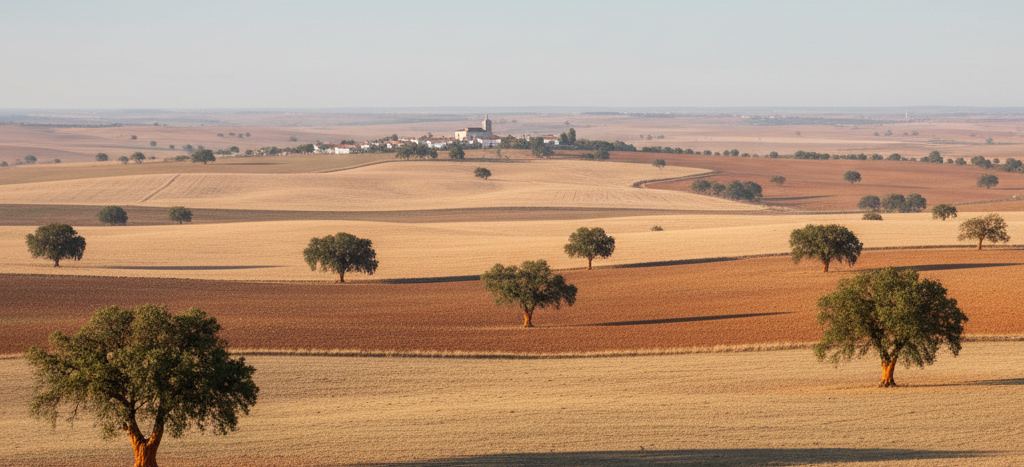
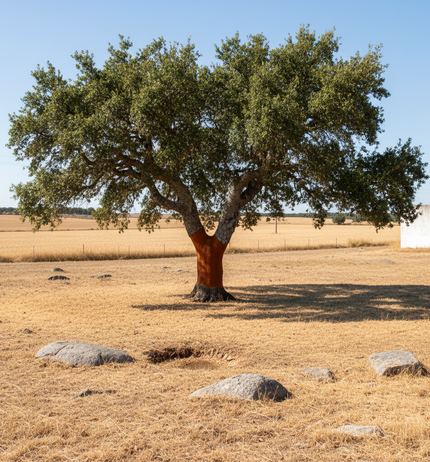
The Alentejo is roughly a third of Portugal, about 31,600 square kilometres, slightly larger than Belgium with a population under a sixteenth of it. Most of it is worked land rather than view. North and west of Evora the fields are wheat and sunflower over a low swell of hills. South towards Beja the ground flattens until the horizon is one line with two or three trees standing on it and nothing else for twenty kilometres. The oaks take the longest to read. Cork oak and holm oak stand widely spaced over grazed pasture in a system worked for centuries. A cork oak is stripped by hand roughly every nine years, the interval fixed by law, and a freshly stripped trunk carries a deep ochre band and a painted number giving the year it was cut. Once you have noticed the numbers you can date a whole hillside from the car. East of Estremoz the ground turns to marble, and three small towns sit on one of the larger deposits in Europe, quarried as open pits a hundred metres and more into white and grey stone. Further east the Alqueva reservoir covers about 250 square kilometres behind a dam completed in 2002, with some 1,160 kilometres of shoreline. It drowned a village whose people were moved a kilometre uphill into a new one built for them. On a moonless night the sky over that water is genuinely dark, and the darkness itself is formally protected, which is rare in western Europe.
One base, a hire car, and the two hours from the airport
Almost everyone reaches the plain from Lisbon. The airport sits on the north edge of the city, the A6 runs east, and Evora is about 130 kilometres out. In clean traffic that is ninety minutes. With the ring road, one wrong exit and a stop for coffee it is closer to two hours, which is where the figure in the house shape comes from. The base is usually Evora itself, a walled town of about 54,000 people whose centre has been listed as world heritage since 1986, or a converted farm building ten to twenty minutes outside it. Each has a cost. Inside the walls the streets are narrow, one way and largely resident parking, so the car becomes a small daily problem. Outside, the car is easy and dinner means driving, which sets a firm limit on the wine. The car is not optional. Buses between the small towns run once or twice a day, not at all on Sundays in several places, and they are timed for schoolchildren rather than visitors. Motorway tolls are electronic; ask at the rental desk for the transponder, because without one the charges arrive by post months later. Fuel stations thin out badly away from the A6, and on a Sunday afternoon in the south a quarter of a tank is not a comfortable amount to be carrying.
Four working days, and what fits in them
A day here is usually 60 to 120 kilometres of driving, one town walked slowly, and a lunch that runs two hours because everything else is shut anyway. Municipal museums and most monuments close on Mondays. Shops and many kitchens shut between one and three, and in the smaller towns the street empties for that entire period, which undoes a tight itinerary quickly. From an Evora base the honest radius is small. Monsaraz, walled on its hill above the reservoir, is 55 kilometres and about fifty minutes. Estremoz and the marble towns are 46 kilometres. Arraiolos, inside its round castle wall, is 22. Beja is 78 kilometres south across the flattest of the wheat. The fortress town of Elvas is 85 kilometres east and makes a long day of it. Mertola, on the Guadiana in the far south, is 180 kilometres and does not fit this shape at all. In Evora the Roman temple keeps fourteen granite columns standing in the middle of a square, the cathedral lets you onto its roof, and the chapel lined with the bones of some five thousand people takes twenty minutes and stays longer than that. Four days will hold Evora, two of the walled towns, one slow day of driving with no destination, and one day lost to rain or tiredness. That is the realistic account of it.
Shoulder season, and the reason it is not July
Shoulder here means April into the middle of May, or late September into October. In April the plain is still green from the winter rain, there are wildflowers in the pasture, daytime highs sit around 21 to 25 degrees Celsius and nights fall to nine or ten, so a jacket earns its space in the bag. By the third week of May the green has gone to straw and stays that colour until autumn. October is the other one. Early in the month highs run 23 to 26 and fall to about 19 by the end. The first rains land somewhere inside it, usually as two or three heavy days rather than a grey week, and afterwards the dust is gone and the light is very clean. Sunrise is around a quarter past seven and it is dark by seven in the evening, which shortens the driving day more than people expect. July and August are a different proposition. Interior temperatures of 35 to 40 degrees are ordinary, the national record of 47.4 degrees was set on this plain in August 2003, and between noon and five the towns simply stop. The office will arrange those months if that is when the leave falls, and will say plainly that four usable days become about two and a half. Nobody can promise weather. April has delivered four wet days out of five.
Who the shorter stay suits, and who it does not
Five nights works if this is not your first sight of Portugal, or if it is and you have decided on one region rather than three. It works if the number of days is fixed and unmovable and you would rather spend all of them in one place than split them. It works if you drive without thinking about it, because the driving is most of what the trip consists of. It does not work if you also want the coast. The Atlantic edge is 160 to 180 kilometres west of Evora, two hours out and two hours back on roads slower than the map suggests. Inside five nights that costs either a whole day or the single base, and the single base is the part holding the rest together. It does not work if you would rather not drive. There is no version of this built on taxis and rural buses that leaves you anything at all. And it does not work if the point of the holiday is walking the long marked route along the coast. That needs a bed which moves nearly every night and more nights than five. It exists, it is arranged differently, and the difference is one of kind rather than degree.
Awkward questions about this change
- Is five nights enough to see the Alentejo?
- No, and neither is eight. The region is about the size of Belgium and people give it decades. What five nights is enough for is one base, four working days and a radius of roughly eighty kilometres: Evora properly, two of the walled hill towns, one day of driving with nowhere in particular to be, and one day handed back to rain or fatigue. If the plan on paper has six towns in it, the plan is wrong, and the office would rather say so while the dates are still loose than after anything has been held.
- Can the coast go in as well?
- No. The cliffs and river mouths of the Atlantic edge are 160 to 180 kilometres from an Evora base, which is two hours out and two hours back on roads that read faster on the map than they drive. Inside five nights that spends a full day to buy a few hours of coastline, or it spends the single base, which is the part of the shape everything else hangs on. It is not arranged as an addition. If the coast is the point, the sensible answer is a coastal base and a separate set of nights, and that can be quoted on its own.
- Do you arrange the flights?
- No. This office moves nobody by air and nobody by sea, and holds no agreement with anyone who does. Travellers hold their own tickets. What is arranged here is the five nights built around whatever times those tickets carry: which day the car is collected, whether a late arrival makes the first night worth placing nearer the airport, and how much of the last morning is genuinely free before the car has to go back. Send the times once you have them and the rest is fitted to them.
- What is in the $1,690, and what is not?
- Five nights for two in one base at shoulder rates, and a small hire car for the same period on the rental company's standard terms. Not included: fuel, motorway tolls, meals, entry to anything, and the flights, which are yours. Money never runs through this office. The people holding the room and the car collect it the way they always do, and the office is paid afterwards out of the supplier's side of the arrangement. No card number is ever typed in Birmingham. The final figure is the supplier's to confirm when the booking is placed.
- What happens if the weather turns during those five days?
- Then it turns. The first autumn rains arrive somewhere in October and tend to come as two or three heavy days rather than a week of grey, and nobody here can tell you in advance which days those will be. What the shorter stay does is concentrate the exposure: one day lost out of four is a quarter of the trip, where the eight night version has more to absorb it with. That is a straightforward difference between the two lengths, and it is worth knowing while the dates can still move.
Others that move the shape about as far
There is no package on this site that somebody has not already asked for, and the thirty in the book are the requests that came back more than once.
-
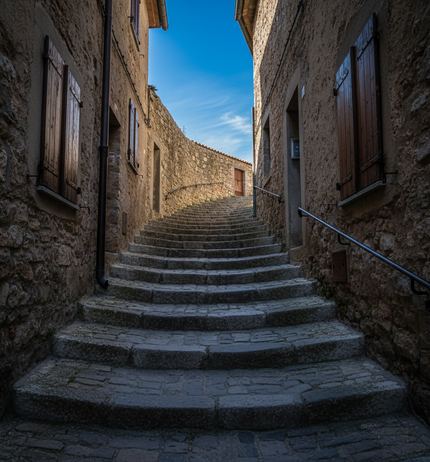
The Umbrian hill country
Italy · twelve nights instead of eight
from $2,890 two sharing one part changed -
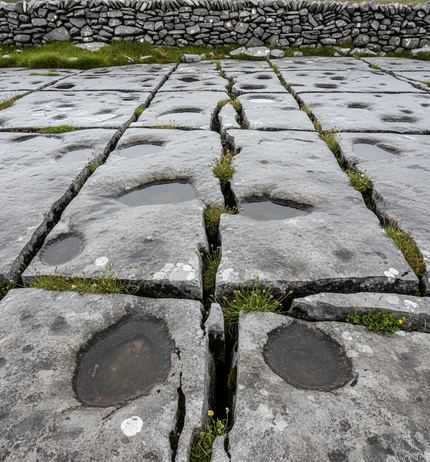
The Burren and south Connemara
Ireland · a driver instead of a hire car
from $3,140 two sharing one part changed -
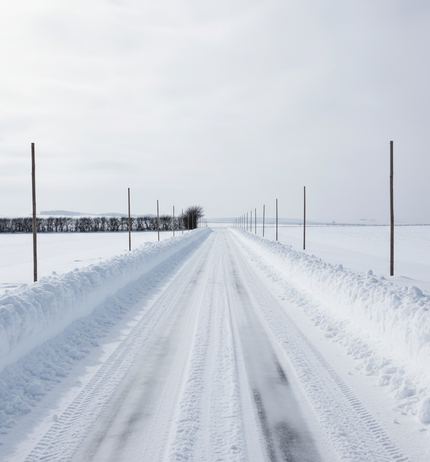
The Jura plateau
France · deep winter instead of shoulder season
from $2,410 two sharing one part changed -
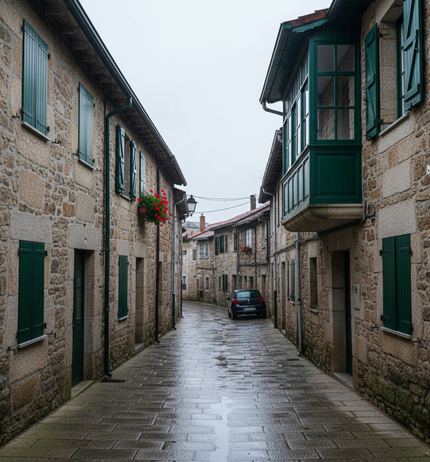
The Asturian coast road
Spain · four of you instead of two
from $2,180 two sharing one part changed -
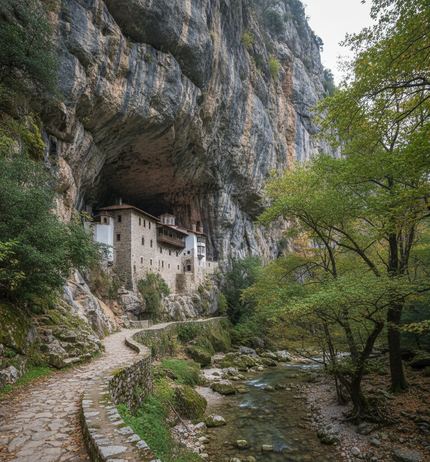
Inland Arcadia
Greece · four hours from the airport, not two
from $2,260 two sharing one part changed -
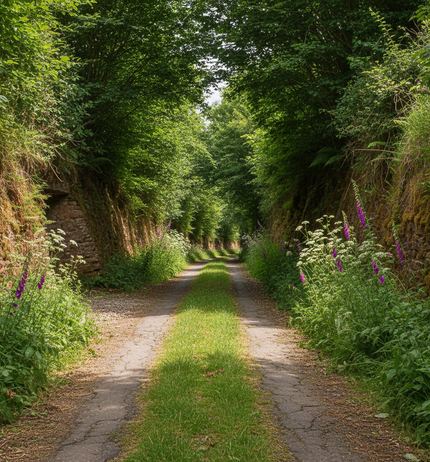
The Welsh Marches
Wales · high summer instead of shoulder season
from $2,520 two sharing one part changed -
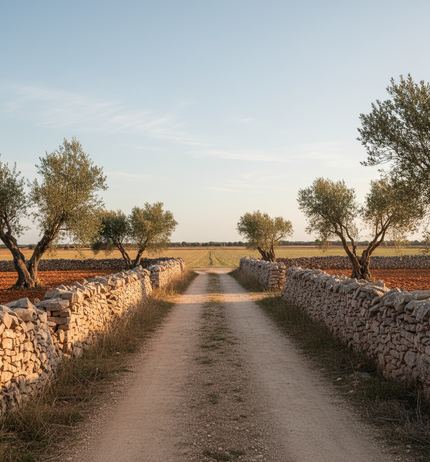
The heel of Puglia
Italy · one person instead of two
from $2,740 two sharing one part changed -
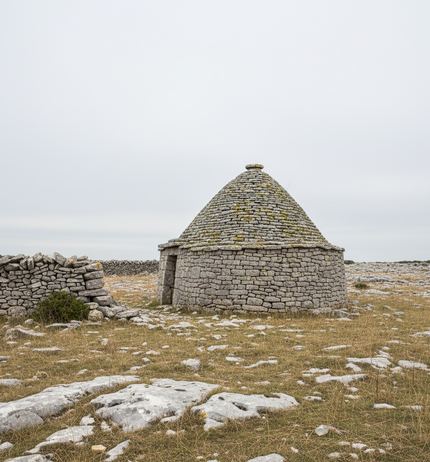
The Aveyron causses
France · sixteen nights instead of eight
from $3,880 two sharing one part changed -
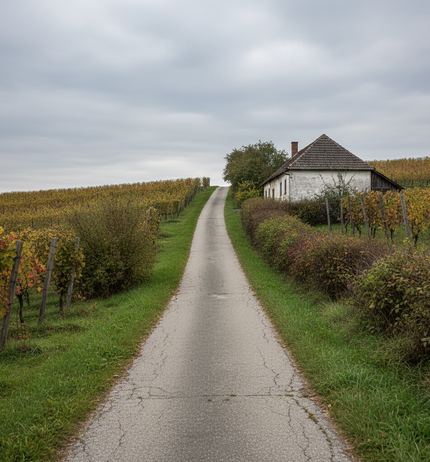
Eastern Slovenia and the Prekmurje
Slovenia · no car at all, trains and a bicycle
from $2,050 two sharing one part changed
Ask for this change in writing
Not a cent moves through here. The supplier bills you under its own name, and what this office earns reaches it from that supplier weeks later.