Home / Thirty changes / One part of the shape changed / The Jura plateau
The house shape with its season taken out
Deep frost instead of shoulder season is the whole change, so reserve a winter stay on the Jura plateau
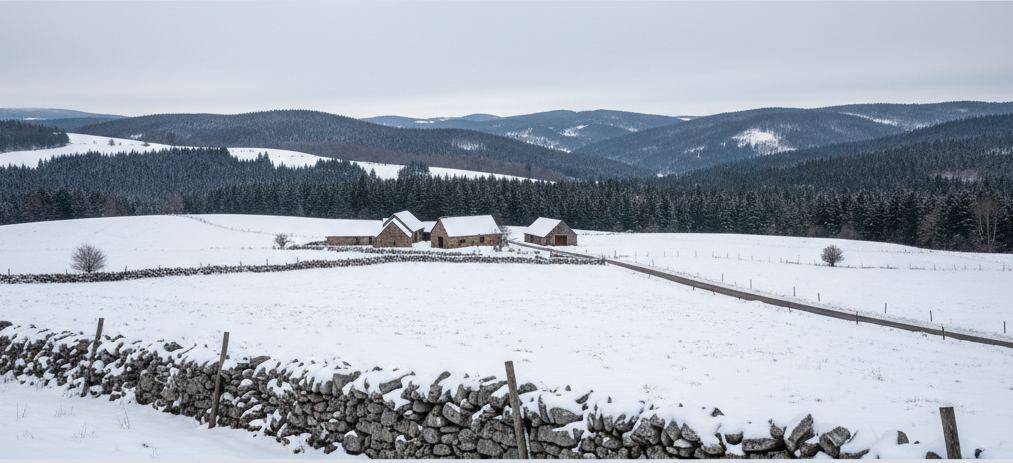
One named part of the house shape is missing here. Shoulder season goes and deep winter takes its place; the eight nights, the one base, the hire car and the two hours from the airport all stand as they are. You can reserve a winter stay on the Jura plateau from $2,410 for two: a limestone tableland at 900 metres in January, snow on the meadows, minus 15 at dawn.
| What it breaks | deep winter instead of shoulder season |
|---|---|
| Nights | 8 instead of 8 |
| Places you sleep | 1 |
| Car | a hire car, as the shape has it |
| From where you land | 2 hours |
| Season | winter |
| People the figure is built on | 2 |
| How far from the shape | one part changed |
| Two sharing pay | from $2,410 |
The part that breaks, and what stands in for it
Shoulder season is the piece we take out. Everything else holds: eight nights, one base you unpack into once, a hire car, roughly two hours from the airport to the front door, two people. What replaces it is January or February on a plateau that sits above 800 metres, which asks different things of a week than the same house does in late April. The price moves from $2,340 to $2,410. That seventy dollars is not a season surcharge in the abstract. It is winter tyres on the hire car, which are required in the Jura massif between 1 November and 31 March, and it is a heating allowance, which winter lets on the plateau either bill separately or fold into a higher nightly rate. Nothing else in the arrangement moves. We do not rank the two weeks against each other and we will not be drawn into it on the phone. What we can do is name every part that changes, and this is the whole list: the calendar, the tyres, the heating, and about seven usable hours of daylight in place of fourteen.
Ground, and how high it sits
The Jura is a range of folded limestone running up the eastern side of France, and this trip uses the shelf behind the summit line rather than the tops: broad tablelands between 800 and 1,100 metres, cut by flat-floored valleys the locals call combes and by blind valleys, reculees, that stop dead at a cliff with a spring at the foot of it. It is farmland, not wilderness. Hay meadows under snow, drystone walls, villages of thirty to four hundred people, a road network laid out for milk lorries. Above about 900 metres the cover usually lies from the third week of December into March, thirty to eighty centimetres on the flat in an ordinary February, considerably more where the wind has piled it against a wall. The cold is the part visitors underestimate. The plateau is full of closed hollows with no drainage, so cold air pools in them overnight and does not move. Mouthe, which sits in one of them, has recorded minus 36.7. Minus 15 to minus 20 at dawn is an unremarkable reading in a January high pressure spell, and the same afternoon can reach minus 2 in full sun.
What the eight days actually consist of
Days start late here, because nothing softens before ten. A normal one runs like this: out at half past nine, forty minutes in the car, four or five hours on foot or on tracked trail, back inside before the light goes at five. The plateau is the home ground of nordic skiing in France and the tracked network is why most people come. The long route across the massif runs about 180 kilometres end to end; you would use short pieces of it, and a day pass for the tracks costs around twelve euros. If you have never done it, two mornings of instruction is the usual price of admission. Snowshoes need no instruction at all and go where the tracks do not. Frozen water is worth building days around. The Herisson falls drop 31 metres at the Eventail, and after a hard fortnight the whole staircase stands in blue and white columns; the path from the lower car park is 3.7 kilometres each way and, on ice, slower than that sounds. The karst springs at the Lison and the Loue run at about 7 degrees all winter and steam in still air. Two days of the eight are usually indoor and slow: a village fruitiere at its morning make, a cellar of maturing wheels, a lunch that takes three hours.
The car, and what winter does to the driving
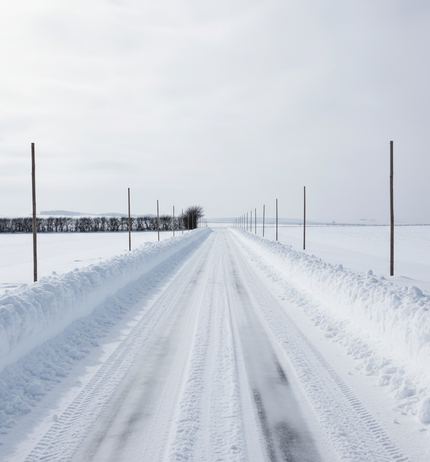
The hire car is the same line on the invoice as in the house shape, and it does more work in this version. The main roads across the plateau are ploughed early and salted where the gradient demands it. Everything below that grade is packed snow from December to March, and it stays packed because it does not thaw in between. Three practical points. The car must carry winter tyres to be legal in the massif from 1 November to 31 March, and we ask the rental desk to confirm the fitting in writing before you travel, because a summer set on a plateau road in February is not a small inconvenience. Chains live in the boot and get used perhaps twice in eight days, always on the last kilometre. And that last kilometre is the question to ask early: village streets are ploughed by the commune, a private track up to a converted farm building may not be, and we get that in writing too. Driving times are honest but slow. Thirty kilometres of plateau road in winter is fifty minutes, not twenty. We plan the week on that arithmetic, which is why the daily radius is tighter than you might expect and why one base still holds.
Light, and the hours it gives you
Mid January on the plateau: the sun clears the eastern ridge around quarter past eight and is behind the western fold by about five, and down in a combe you lose most of an hour off each end of that. Call it seven usable hours. It is enough for one substantial thing a day and not two, and the weeks that go badly are the ones planned as though it were June. The compensation is the inversion. Cold air settles into the plain to the west under a lid of low cloud and can sit there for days, leaving the plateau in sun at 1,000 metres while the valleys below stay grey at noon. It happens often enough to be worth mentioning and not often enough to be promised; some winters the cloud is on top of you instead and stays. Opening hours run on the same short measure. Village shops close for two hours at midday, a good many restaurants shut Sunday evening and all of Monday, and cellar visits are morning only and by arrangement. We reserve what needs reserving before you go, which across eight nights comes to three or four fixed points and the rest left loose.
Who this change suits, and who it does not
It suits people who are content to be cold outdoors for four hours and then indoors for six. People who can drive on snow, or who are willing to spend the first two days learning. People who like a place that is working rather than performing, and who do not mind that the work in question is dairy farming in a month when the herds are inside. It does not suit anyone who needs a large lift-served ski area. There is downhill on the massif, but it is small, low and dependent on the season, and if that is the point of the holiday then this is the wrong week and we will say so on the first call rather than the last. It does not suit travellers who want restaurants and shops within walking distance; the base is a house on the edge of a village of three hundred, and the car is not optional at any point in the eight days. And it is a poor fit for anyone who reacts badly to short days, because by the third morning the light stops being a detail and starts being the thing that shapes the week. If any of that lands wrong, the same house in late May is the house shape, and we would rather move you onto it than sell you a January you spend indoors.
Awkward questions about this change
- Can you promise there will be snow?
- No. Nobody can, and an office that told you otherwise would be selling something it does not own. What we can hand you is the record: above 900 metres the plateau usually holds cover from the third week of December into early March, and the trail grooming operates on that assumption. Thin winters happen, and two of the last ten were poor below 1,000 metres. If you want the arrangement to bend in a bad year, raise it before you commit and we will put a late change clause to the owner of the house in writing. Some agree to one. Some will not, and we will tell you which you are dealing with.
- Do you arrange our flights?
- No. Cedar Passage puts nothing in the air and nothing on the water, and has signed with no carrier, and will not pretend otherwise to make a week look tidier. Your own flights are yours to sort out, and we would rather you fixed them after the house and the car are confirmed than before, because the house is the scarce item in January and the seats are not. Tell us the dates you are considering and we will tell you whether they sit well against the grooming schedule and the dairy make days, which is the part of it we actually know something about.
- Can we leave a deposit with you to hold the dates?
- No, and this is not a policy that can be talked round. This office holds no card details and takes no money from travellers at any stage. Payment happens at the far end, on the terms of the people who own the house and the desk that rents the car, and our fee reaches us afterwards out of their side of the arrangement. The practical effect for you is that only they can accept a deposit, and before anything is signed we will tell you who is asking, how much, on what date and what happens to it if you cancel.
- Could we do five nights instead of eight and pay less?
- Yes, and the arithmetic is less flattering than you might hope. Eight nights carries a weekly rate. Five nights on the plateau in January is a short let in a cold month, and it does not scale down neatly, because the house has to be brought up from cold either way and that cost sits at the front. Expect something near $1,950 for the five. If the shorter stay is really about the length of the drive rather than the money, say so, and we would look instead at a base an hour from the airport rather than two.
- Neither of us skis. Is there anything here for us?
- Yes, and it changes the days rather than the destination. Roughly half the people we send to the plateau in winter never put skis on. Snowshoes cost about fifteen euros a day, need no lesson beyond a five minute demonstration, and reach the floor of a reculee, the frozen margin of a lake and the woods above a village. Add the cellars, the springs, the ice at the falls and two very long lunches and the eight days fill themselves without difficulty. What you should not do is come with no intention of being outside in cold air, because there is very little else on offer.
Others that move the shape about as far
There is no package on this site that somebody has not already asked for, and the thirty in the book are the requests that came back more than once.
-
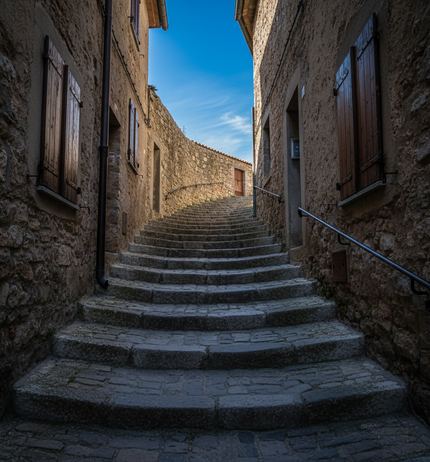
The Umbrian hill country
Italy · twelve nights instead of eight
from $2,890 two sharing one part changed -
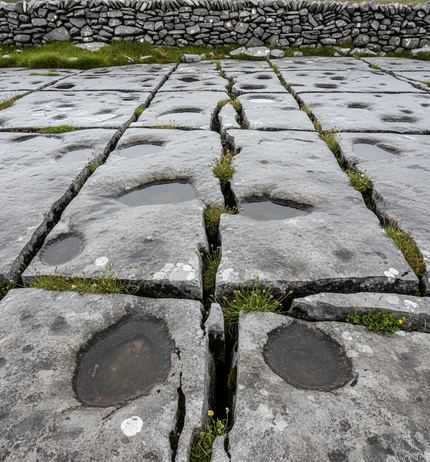
The Burren and south Connemara
Ireland · a driver instead of a hire car
from $3,140 two sharing one part changed -
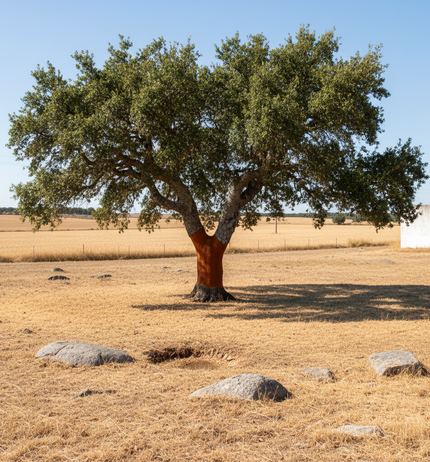
The Alentejo plain
Portugal · five nights instead of eight
from $1,690 two sharing one part changed -
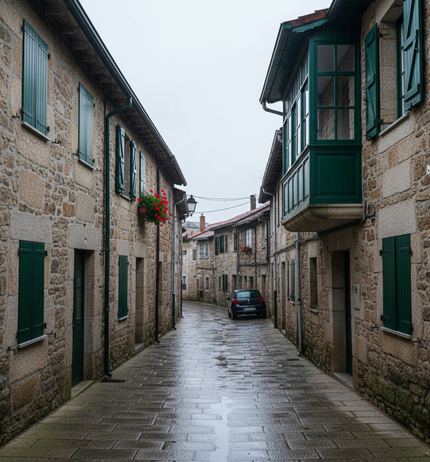
The Asturian coast road
Spain · four of you instead of two
from $2,180 two sharing one part changed -
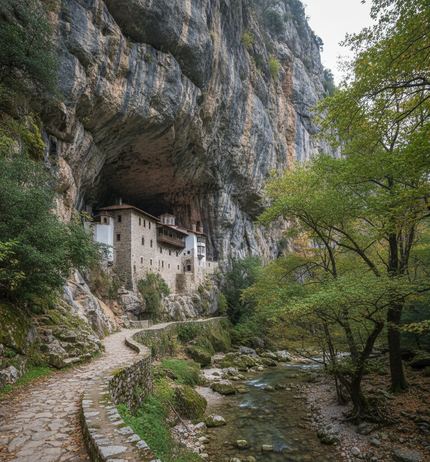
Inland Arcadia
Greece · four hours from the airport, not two
from $2,260 two sharing one part changed -
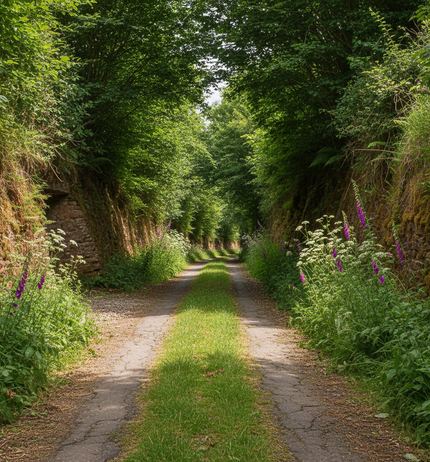
The Welsh Marches
Wales · high summer instead of shoulder season
from $2,520 two sharing one part changed -
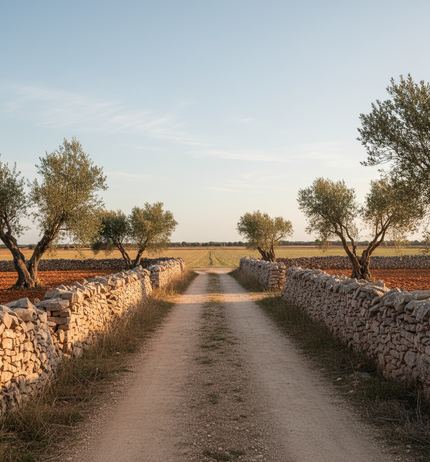
The heel of Puglia
Italy · one person instead of two
from $2,740 two sharing one part changed -
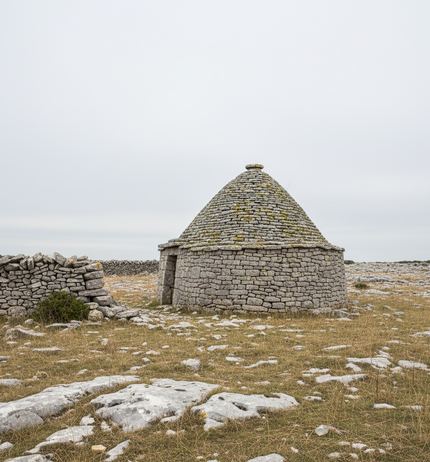
The Aveyron causses
France · sixteen nights instead of eight
from $3,880 two sharing one part changed -
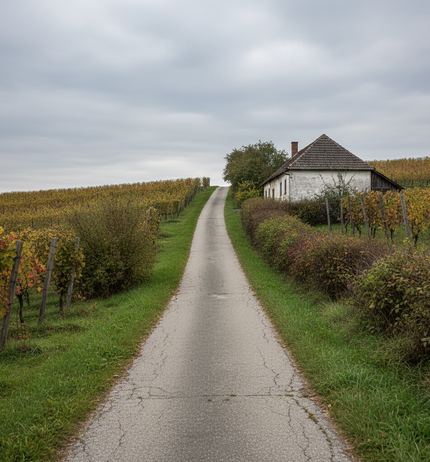
Eastern Slovenia and the Prekmurje
Slovenia · no car at all, trains and a bicycle
from $2,050 two sharing one part changed
Ask for this change in writing
Not a cent moves through here. The supplier bills you under its own name, and what this office earns reaches it from that supplier weeks later.