Home / Thirty changes / One part of the shape changed / The Welsh Marches
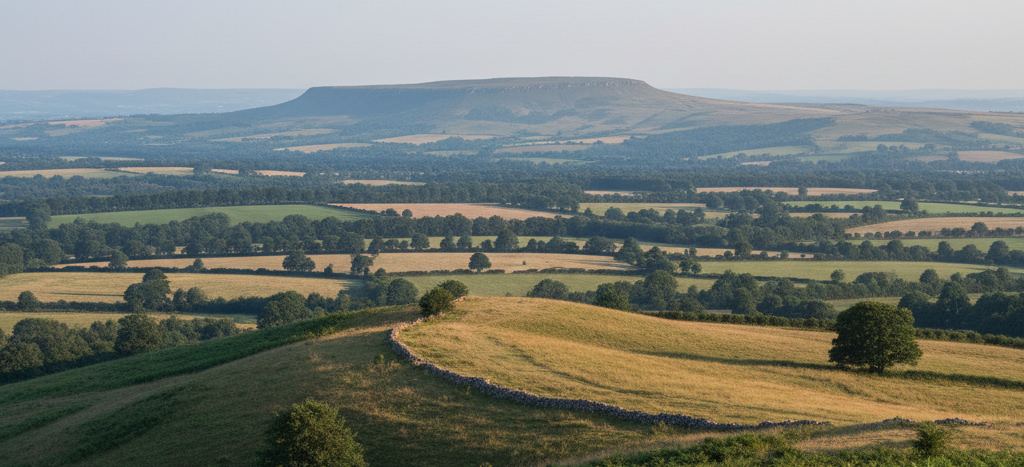
The season swapped, every other line held
Eight nights of long northern light are the reason people reserve a summer trip to the Welsh Marches
The part that breaks here is the season. Shoulder goes; the middle of July to the third week of August takes its place, and every other line of the house shape holds. That is the whole change, and it is what it takes to reserve a summer trip to the Welsh Marches: sixteen hours of light, fuller lanes, low rivers, a floor of $2,520 for two.
| What it breaks | high summer instead of shoulder season |
|---|---|
| Nights | 8 instead of 8 |
| Places you sleep | 1 |
| Car | a hire car, as the shape has it |
| From where you land | 2 hours |
| Season | summer |
| People the figure is built on | 2 |
| How far from the shape | one part changed |
| Two sharing pay | from $2,520 |
What is lifted out, and what goes in
The house shape puts you here in May or in late September. This one lifts the season out and drops the middle of July to the third week of August in its place. Every other line holds without argument: eight nights, one base you unpack into once, a hire car, under two hours from where you land, two people. The floor moves from $2,340 to $2,520, and the whole of that $180 sits in two lines of the quote, the house for eight nights inside the school holiday weeks and the car for the same weeks. Neither figure is a judgement about which of the two shapes you should take. What the swap buys is light. In the third week of July it is bright enough to start walking around ten to five in the morning, the sun goes down about twenty past nine, and there is another half hour of usable grey after that. A ridge that would have you finishing by torch in late September finishes with the evening still in front of you. What the swap costs is edge. The lanes carry holiday traffic, the bracken is up, the streams are thin, and the distance goes soft with haze by eleven in the morning instead of staying sharp all day.
The ground between two countries
The Marches are the strip where English lowland runs out and Welsh upland begins, about 160 miles of it from the Dee in the north to the Severn estuary in the south. The line between the two countries is not really a line here at all, more a band of hills, hedged fields and market towns fifteen miles wide that changed hands for four hundred years. Running through it is an earth bank and ditch thrown up in the eighth century. On the ridges above Knighton it still stands two metres above its own ditch, and you can walk along the top of it for miles. The high ground arrives in separate lumps rather than as a range: Hergest Ridge at 426 m, bare and grassy and crossed in ninety minutes; the Long Mynd, a seven mile whaleback with Pole Bank at 516 m; the Stiperstones, a line of shattered quartzite tors at 536 m that reads from below like a wrecked wall; and at the southern end the Black Mountains, where Hay Bluff stands at 677 m and Waun Fach at 811 m. Between them the Wye, the Lugg, the Teme and the Monnow cut valleys with towns in them: Ludlow, Bishop's Castle, Knighton, Presteigne, Kington, and Hay-on-Wye, where about twenty shops sell secondhand stock.
Eight days out of one door
The base in this shape sits near Kington or Presteigne, which puts almost everything inside an hour and a quarter of the front door. Hay-on-Wye is fifteen miles, Ludlow twenty six, the ruined twelfth century priory at Llanthony thirty, the Long Mynd thirty five, the reservoirs west of Rhayader thirty. Those reservoirs, incidentally, were built between 1893 and 1904 to send water seventy three miles downhill by gravity to a different Birmingham. A day tends to run like this: twenty to forty five minutes in the car, park in a village or at a hall with an honesty box asking two or three pounds, eight to twelve miles on foot, back to the same bed. Eight nights gives you seven of those and one day when the cloud is down to the fields and you drive to a town instead. Ludlow holds a market on Monday, Wednesday, Friday and Saturday; Hay-on-Wye holds one on Thursday. Shops in the small towns shut at five, several still take a half day midweek, and village kitchens stop taking food orders around half past eight. Sunday is lunch and then nothing at all.
Heat, bracken, and water that is not there
July and August average about 21 degrees by day at valley level, which sounds mild and is, until you are in a stone house with no cooling and a converted attic bedroom facing west. Indoor temperatures in the high twenties at midnight are ordinary in a hot week. If that matters to you, say so at the start and the office will look for a ground floor room. The bracken is the other change. By the third week of July it is waist high on the lower slopes and chest high in the folds, and it hides the line of a path that was obvious in May. It also carries ticks; Lyme disease is present in this country, so long trousers and a check each evening are sense rather than fuss. On still afternoons the flies living in it will find you within a minute. Water goes the other way. Hill streams that ran in spring are dry gravel by August, so carry two litres each rather than counting on finding a spring. The Wye drops and warms, and in low warm summers it has grown algal blooms; in some years swimming in it is a poor idea, and the office will say so rather than let you find out. Rain has not been abolished either: the Black Mountains take more than 1,300 mm a year and three wet days in a row in August is an ordinary week, not misfortune. The last Monday of August is a public holiday, and that weekend is the fullest these roads get.
Driving the lanes
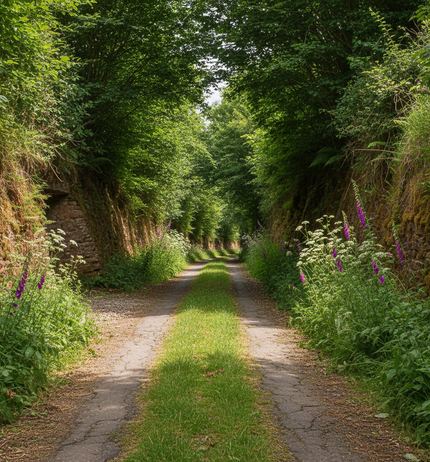
The car is the part of the house shape that does most of the work here, and the part people underestimate. Away from two or three A roads this is single track with passing places, hedgebanks grown above the roof line, blind bends taken on trust, farm gates and cattle grids. Reversing two hundred yards uphill to a passing place is a normal event rather than a disaster, and it is a great deal easier in a small car, so ask for the small car. Manual gearboxes are the default in Britain; an automatic has to be requested well in advance and costs more, so raise it early if you need one. July is also silage and hay, which means tractors with trailers on the same lanes at the same hours. Two roads are worth naming in advance. The Burway, climbing out of Church Stretton onto the Long Mynd, is single track at one in four in places with an unfenced drop on one side and no room to change your mind. The Gospel Pass, at 549 m the highest road in Wales, is gated single track over the top from Hay-on-Wye into the Vale of Ewyas, and in August you will meet minibuses coming the other way. Fill the tank in the market towns, because the village pumps are long gone, and put the maps on the phone before you leave the house, because the signal fails in the valleys.
Who the swap suits, and who it does not
It suits people who want the evening back. Sixteen hours of usable light means a full day on the hill and an hour outside afterwards, and it means a pair where one walks and one would rather sit in a town can split the day and meet at six without anybody waiting in the dark. It suits anyone tied to school dates, which is a good part of why this shape exists at all. It suits people content to see the country soft and hazy rather than hard edged. It does not suit anyone who sleeps badly in heat, because the houses here are built to hold warmth in and most have no way of losing it. It does not suit anyone whose main reason for coming is the river. It does not suit a walker who wants a ridge to themselves, since the well known tops carry people all day in August and the car parks below them are full by ten. And it does not suit anyone who came for empty lanes, because the same lanes in the shoulder weeks carry a fraction of this traffic. Cedar Passage will lay both versions out in the same detail and will not tell you which one is the right holiday.
Awkward questions about this change
- Do you arrange the flights as well?
- No. Cedar Passage sells no seat in the air and no place on a boat, and signs with no carrier at all, and will not quote you a fare. Your flights are yours, in your own name, on dates you choose. What the office will do is tell you which arrival times leave enough of the afternoon to reach the base, find the house and get food in before the village shop shuts, and then hold the house and the car around those dates once you have them. If a flight of yours moves, tell the office and it will move the rest to match.
- Which season would you recommend, this one or the shoulder weeks?
- Neither, and not out of coyness. The office will set the two side by side and then stop. In the shoulder weeks the air is clear, the lanes are quiet, the streams run, and the light gives out by eight in the evening. In July and August the light runs past nine, the bracken is up and covering paths, the rivers are low, and the popular car parks are full by mid morning. Which of those you would rather live with for eight nights is yours to decide, and the office holds no view on it that should outweigh yours.
- Is $2,520 what we will actually pay?
- It is the floor: two people, eight nights, one base and one car, in the ordinary weeks of the window. It moves with the house you pick, and it moves again for the last week of August, which carries the public holiday. You never pay this office. No card number reaches it and it holds no deposit. Money is settled with whoever owns the house and whoever owns the car, on their terms and at their own moments, and the commission that keeps this office running comes back from them after you have travelled.
- Could we do this without the hire car?
- You could reach one market town by rail and stay in it, but that is a different holiday rather than this one with a part removed. Buses run a few times a day between the towns and almost never into the valleys the walks start from, and the last one back is usually mid afternoon. Eight nights in one base with no car would leave roughly four of the eight days working as intended. If you would rather not drive on these lanes, say so at the start and the office will build something around a single town instead.
- We want the literary festival at Hay-on-Wye. Can you put the trip on those dates?
- Not inside this shape. That festival runs across the end of May and the first days of June, which sits in the shoulder window the house shape already uses, so by high summer it has been over for six weeks. If those dates are the reason you are coming, the office will start from the house shape and break something else instead, most probably the base, because beds within twenty miles of the town are taken close to a year ahead for that fortnight and the ones left are further out.
Others that move the shape about as far
There is no package on this site that somebody has not already asked for, and the thirty in the book are the requests that came back more than once.
-
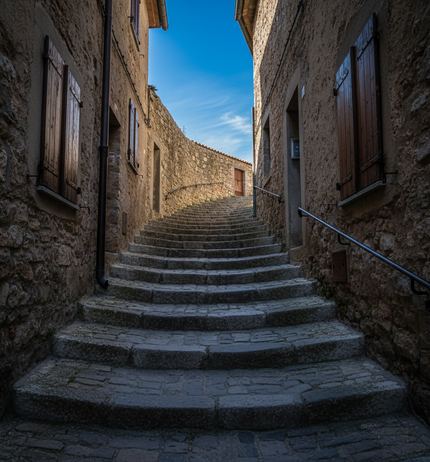
The Umbrian hill country
Italy · twelve nights instead of eight
from $2,890 two sharing one part changed -
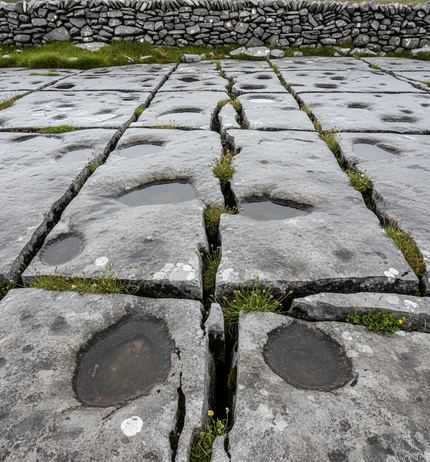
The Burren and south Connemara
Ireland · a driver instead of a hire car
from $3,140 two sharing one part changed -
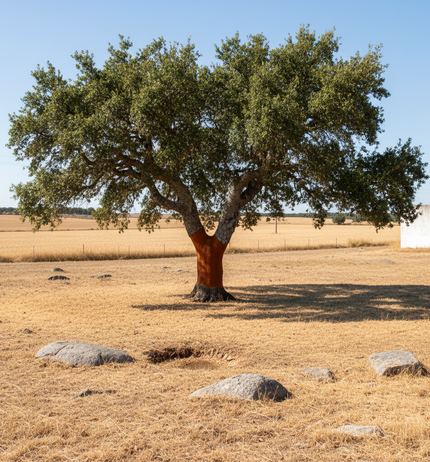
The Alentejo plain
Portugal · five nights instead of eight
from $1,690 two sharing one part changed -
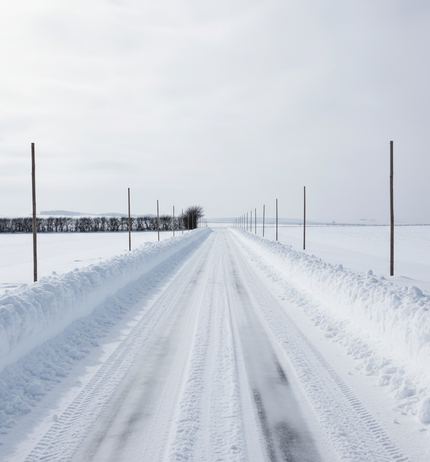
The Jura plateau
France · deep winter instead of shoulder season
from $2,410 two sharing one part changed -
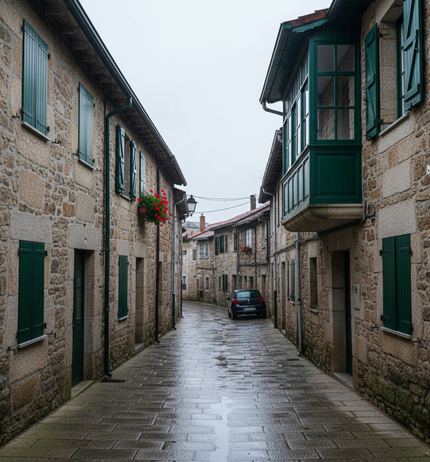
The Asturian coast road
Spain · four of you instead of two
from $2,180 two sharing one part changed -
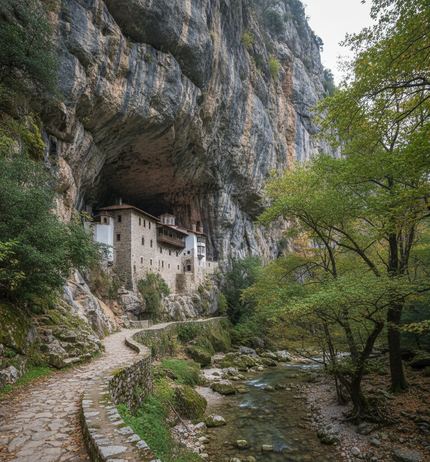
Inland Arcadia
Greece · four hours from the airport, not two
from $2,260 two sharing one part changed -
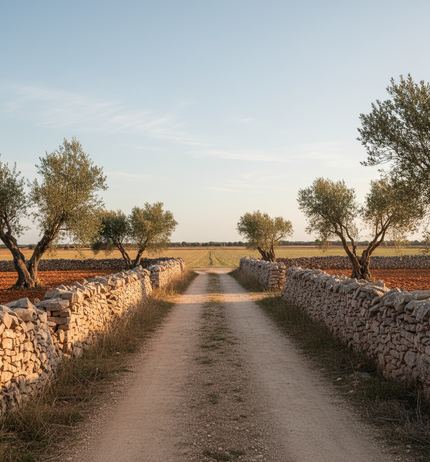
The heel of Puglia
Italy · one person instead of two
from $2,740 two sharing one part changed -
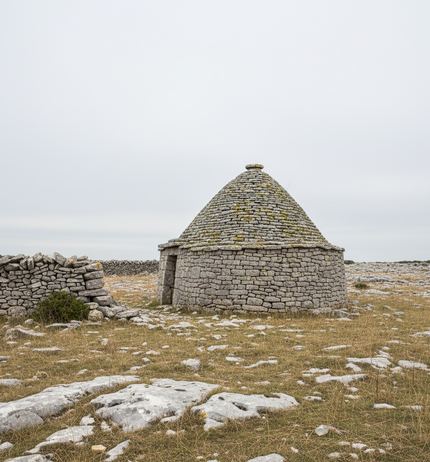
The Aveyron causses
France · sixteen nights instead of eight
from $3,880 two sharing one part changed -
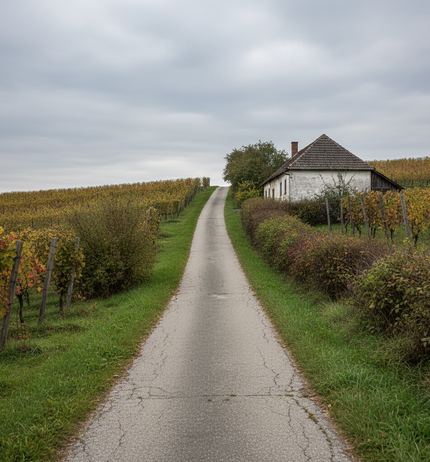
Eastern Slovenia and the Prekmurje
Slovenia · no car at all, trains and a bicycle
from $2,050 two sharing one part changed
Ask for this change in writing
Not a cent moves through here. The supplier bills you under its own name, and what this office earns reaches it from that supplier weeks later.