Home / Thirty changes / One part of the shape changed / Eastern Slovenia and the Prekmurje
The house shape with the hire car taken out
Nobody hands you car keys for eight nights when you book a trip to eastern Slovenia by train and bicycle
One part of the house shape is taken out here, the hire car, and two things stand where it stood: a regional railway worked by a handful of trains a day, and a bicycle kept for the week. To book a trip to eastern Slovenia by train and bicycle is to agree to move at the speed of a timetable, from one base in Murska Sobota, for eight nights, from $2,050 for two.
| What it breaks | no car at all, trains and a bicycle |
|---|---|
| Nights | 8 instead of 8 |
| Places you sleep | 1 |
| Car | no hire car |
| From where you land | 2 hours |
| Season | shoulder |
| People the figure is built on | 2 |
| How far from the shape | one part changed |
| Two sharing pay | from $2,050 |
What comes out, and what goes in its place
Out comes the hire car. Everything else is left where the house shape put it, and this page assumes you have already read that. Two things stand in the car's place. The first is the single track railway that runs east from Ormoz through Ljutomer to Murska Sobota and on towards Hungary, rebuilt at the turn of the century for fast through running and worked now by a handful of regional trains a day. The second is a bicycle, collected on the first morning and kept for the whole eight nights, with a second machine on lower gearing for whoever wants it. From $2,050 for two people. The house shape is from $2,340. The difference is the car and everything that goes into it, and that is arithmetic rather than an argument: neither figure buys a better week than the other, they buy weeks with different constraints. The constraint here is that your day is cut to the shape of a timetable and to how far your legs will go before lunch. Some people find that a relief. Some find it out on day three and resent it for the remaining five.
Flat ground, then thirteen percent
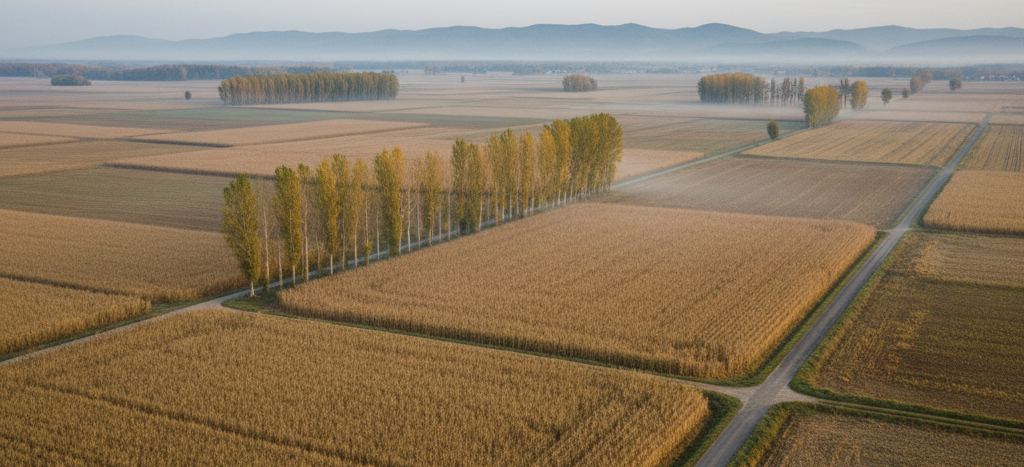
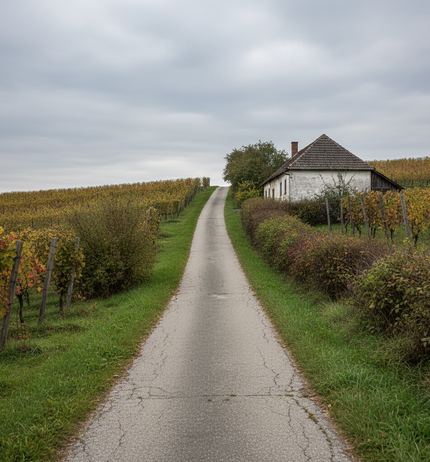
The Prekmurje is the far eastern corner of the country and the westernmost lip of the Pannonian plain, and it comes in three parts. The central belt around Murska Sobota is flat at roughly 185 metres, drained by straight ditches, worked hard for maize, wheat, sugar beet and pumpkins. South and east towards Lendava it stays flat and gets wetter. North of the town the land lifts into the uplands, a country of long low ridges with vines on the sunny flanks, and the riding changes character completely: the high point of the region is 418 metres, which sounds like nothing, but the lanes go straight over the ridges instead of around them, and a short pitch at thirteen percent is ordinary rather than notable. Distances from the base, by road: about 8 kilometres to the thermal village northeast, 14 to the church at Bogojina, 15 to the river at Izakovci, 25 to the castle village up in the hills, 30 to Lendava. A flat day is 40 to 60 kilometres and takes as long as you let it. An upland day is 45 kilometres and a good deal more work. Surfaces are mostly asphalt, some of it patched at the edges; the farm tracks between fields are gravel, and after rain they turn to grease.
Timetables instead of a key
You land at the airport of the Austrian city to the north, take the local train twelve minutes into its main station, and cross to the coach stand for the service that runs southeast and sets you down in Murska Sobota about ninety minutes later. That is the two hours the house shape asks for, and it is the only stretch of the week with any pressure in it, because the coaches run several times a day rather than continuously. Get the arrival wrong and you wait. After that the timetable is the itinerary. Trains from Murska Sobota reach Ormoz in 34 minutes, Ptuj in a little over an hour with one change, Ljubljana in two hours fifty three, four times a day. Departures come roughly every two or three hours with a long hole in the early afternoon, so a day out is planned backwards from the last useful train home rather than forwards from breakfast. Bicycles travel on the regional services for a small extra ticket, in a marked space that takes a few machines, cannot be held in advance and fills on market days. Buses cover some of what the rails do not: Lendava is about 40 minutes by road, and no passenger train goes there at all.
Eight days out of one room
The week is made of short outward runs and the same bed every night, which is the entire argument for a single base. The river day goes southwest to Izakovci, where a wooden mill sits against an island in the Mura with its wheel still turning in the current; the Mura runs fast, cold and grey, and the water meadows on either bank are protected ground, so the loudest thing is usually a distant tractor. The church day goes east to Bogojina, where Joze Plecnik took a small village church in the 1920s and rebuilt it around a black column, a ceiling set with local pottery and a round tower that matches nothing else for fifty kilometres. The hill day climbs north to the castle village, a long baroque pile on an old volcanic knoll, and comes back down the far side of the ridge with the wind behind you if you read the morning correctly. Then there is the thermal village eight kilometres out, where the water comes up dark brown at around seventy degrees and is cooled before anyone is allowed near it. That is the wet weather day. Most weeks need one, and in October most weeks need two.
Shoulder season on the Pannonian edge
Two windows work: late April into early June, and September to mid October. The climate is continental and firmly inland, neither alpine nor coastal. July sits at 19 to 20 degrees as a monthly mean and January hovers just below freezing; the shoulder gives days of 14 to 20 degrees with nights near 5. Autumn is the fog season, and it is the honest weakness of this version of the week. Fog settles in the hollows overnight and on many mornings does not lift until ten or eleven. Occasionally it does not lift at all, and riding a farm lane in white air with a beet lorry coming up behind you is the least pleasant hour this trip contains. Lights and mudguards are not optional in October, and the light has gone by about seven early in the month and well before that by the end of it. Spring runs the other way: clear mornings, then storms that build over the ridges after lunch and cross flat ground quickly, with little to shelter under. Nobody can tell you which days will do what, and this office will not pretend to. Late August brings its own small disappointment: the stork platforms at Velika Polana stand empty by September, the birds having left. You will be looking at nests.
Who changes gear well here, and who does not
This suits two people who can ride 40 kilometres on flat ground without it counting as an event, who would rather learn one district properly than see four of them through glass, and who are not irritated by a timetable. It suits people who like to be back before dark and to be recognised in the same three places by Thursday. It does not suit anyone who has to be somewhere at a fixed hour. It does not suit anyone wanting to add the coast or the mountains inside the same eight nights; the line east is not built for that and the connections will eat a day each way. It does not suit a traveller who cannot ride and does not want half the week on buses. It does not suit heavy luggage, because you will carry it up a platform ramp at least twice. And it does not suit anyone who needs the evenings to supply something: Murska Sobota holds about eleven thousand people and shuts early. On money: this office takes nothing from you and never sees a card. The rooms and the bicycles are paid for where you use them, and the suppliers pay us a commission out of their own margin once the week is over. That arrangement is exactly why we would rather warn you about the fog now.
Awkward questions about this change
- Will you book our flights?
- No. This office sells no seat in the air and no place on a boat, and signs with no carrier at all and will not put its name to one. Your flights are yours, bought in your own name on the airline's own terms. What we will do is tell you which arrival window makes the onward coach work and which one leaves you standing about for three hours with a bicycle you have not collected yet, and we will write that connection down for you before you buy anything.
- One of us does not want to cycle. Does the trip still work?
- Partly, and it is worth being exact about which part. Trains and buses reach the thermal village, Lendava, Ormoz and Ptuj, so the flat half of the week survives intact with no bicycle at all. What is lost is the uplands, where there is no useful public service and the villages sit three and four kilometres apart on lanes. An electric bicycle hired locally by the day closes most of that gap for someone who is unsure rather than unwilling. If neither of you will ride, say so at the start and we will put a different shape in front of you.
- Eight nights in a town of eleven thousand people. Is that not too long?
- For some people, yes, and it tends to show on day six. The base is chosen because it is where the line and the roads meet, not because the town is the point: a good market, a low castle with a museum inside it, three or four places to eat properly and not much beyond that. What fills eight nights is the ground within about thirty kilometres of it. If sitting still in the evening sounds like a penalty rather than the reason for going, this is the wrong week and we would rather say so before you commit.
- Could you put a hire car back in for two of the eight days?
- We can ask the two local desks, but be clear about what it does. The paperwork and the deposit would sit between you and the hire firm rather than with us, the figure on this page would stop describing your week, and the two days you drive tend to swallow the two days you would otherwise have ridden, because the bicycle stays in the courtyard once the keys exist. We will not tell you which version is the better holiday. We will tell you what each one costs and what each one reaches, and leave the choice where it belongs.
- What happens if it rains for four of the eight days?
- You get wet, or you move the day. September and October here can produce a settled fortnight or a run of low grey weather, and no one, this office included, knows in advance which you have bought. The thermal pools, the market hall, the castle museum and the train to Ptuj all work in rain, and the plan holds them in reserve instead of spending them early. The price does not move because the sky did. We would rather put that in writing now than be asked about it on a Wednesday.
Others that move the shape about as far
There is no package on this site that somebody has not already asked for, and the thirty in the book are the requests that came back more than once.
-
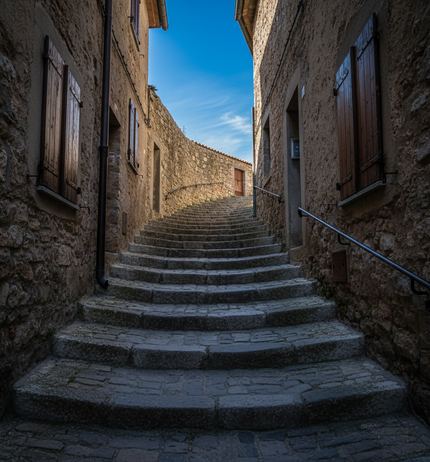
The Umbrian hill country
Italy · twelve nights instead of eight
from $2,890 two sharing one part changed -
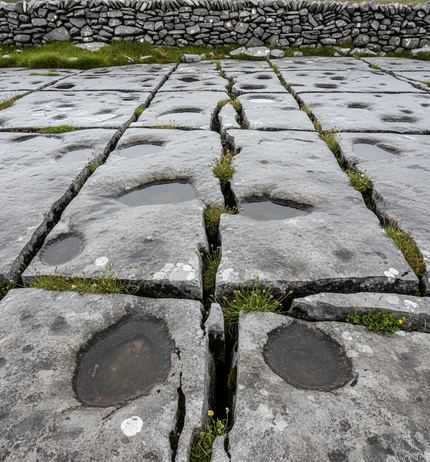
The Burren and south Connemara
Ireland · a driver instead of a hire car
from $3,140 two sharing one part changed -
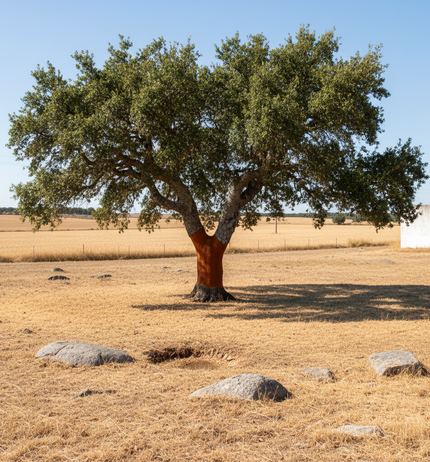
The Alentejo plain
Portugal · five nights instead of eight
from $1,690 two sharing one part changed -
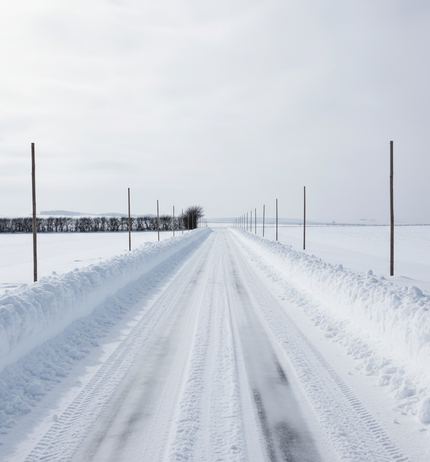
The Jura plateau
France · deep winter instead of shoulder season
from $2,410 two sharing one part changed -
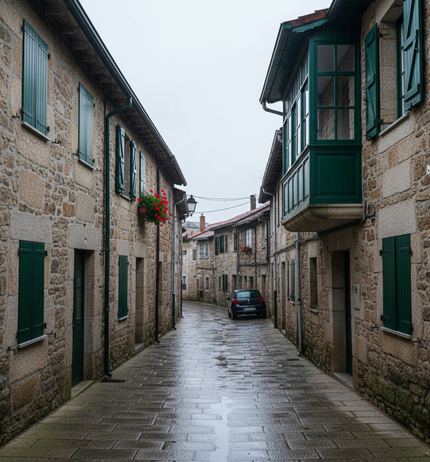
The Asturian coast road
Spain · four of you instead of two
from $2,180 two sharing one part changed -
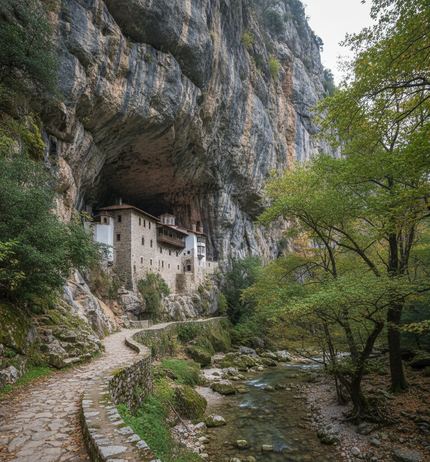
Inland Arcadia
Greece · four hours from the airport, not two
from $2,260 two sharing one part changed -
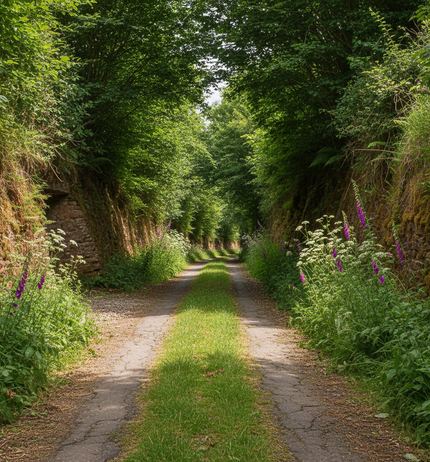
The Welsh Marches
Wales · high summer instead of shoulder season
from $2,520 two sharing one part changed -
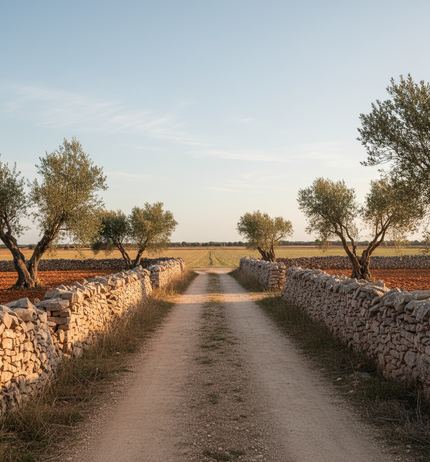
The heel of Puglia
Italy · one person instead of two
from $2,740 two sharing one part changed -
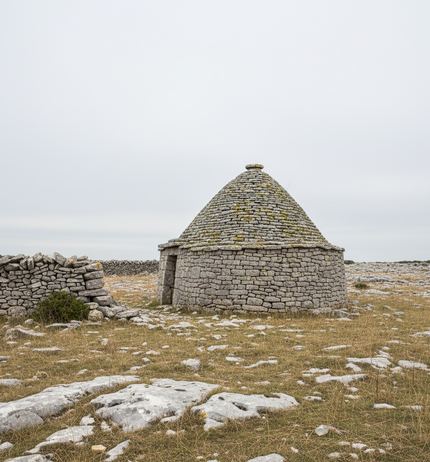
The Aveyron causses
France · sixteen nights instead of eight
from $3,880 two sharing one part changed
Ask for this change in writing
Not a cent moves through here. The supplier bills you under its own name, and what this office earns reaches it from that supplier weeks later.