Home / Thirty changes / Two or three parts changed / North Jutland and the light
Six nights in Denmark in the dark half of the year
Six nights, two bases and a sun that never clears nine degrees, which is why people book a winter trip to North Jutland with a travel agent
Three parts of the house shape break here. One base becomes two, the eighth night goes, and the shoulder season is replaced by a Danish January of about six and three quarter hours between sunrise and sunset. People who book a winter trip to North Jutland with a travel agent are buying the light and the wind, and paying for both in daylight.
| What it breaks | two bases, six nights, deep winter |
|---|---|
| Nights | 6 instead of 8 |
| Places you sleep | 2 |
| Car | a hire car, as the shape has it |
| From where you land | 2 hours |
| Season | winter |
| People the figure is built on | 2 |
| How far from the shape | two or three parts changed |
| Two sharing pay | from $2,270 |
What is broken, and what took its place
Three named parts of the house shape are gone here. The single base, the one you unpack into on the first evening and do not touch again, becomes two. The eighth night goes, leaving six. And the shoulder season, which is doing more quiet work in the house shape than anything else in it, is replaced by a Danish January. What arrives instead is not a small adjustment. Two bases means one of your six mornings goes on loading the car, driving ninety kilometres and waiting for a key, and that morning is short at both ends. Six nights means five full days rather than seven. Deep winter means the light budget for each of those days is under seven hours, so the week holds roughly the usable daylight of three and a half days in May, and it means the coast is doing something violent while you watch a fair part of it through glass. Three things do not change. The hire car stays, for the whole stay, collected where you land. The two hour rule stays with room to spare: fifty minutes to the first base, eighty to the second. And you are still out every day and back to a bed you already know, just to two of them.
Six hours forty five, and what fits inside it
The top of Jutland sits a little over fifty seven degrees north. On the shortest day the sun comes up around 08:50 and is gone around 15:35, six hours forty five between the two, with perhaps forty minutes of workable twilight at either end. By the last week of January that has stretched to about eight hours. The other number matters more. At midday on the solstice the sun stands roughly nine degrees above the horizon and it never climbs out of that, so shadows on sand stay long from breakfast until dark and the whole day has the raking quality that brought painters to this coast in the eighteen seventies. When the cloud allows it. A day here therefore holds one outdoor thing done properly and one indoor thing, and that is the honest capacity. A ninety minute drive each way would eat half the light before anyone had walked anywhere, which is why the walk is chosen first and the bases are chosen around it. Nothing on this itinerary sits more than twenty five minutes from a door. Breakfast in the dark, boots by nine, back at the car by two, and then a long evening that begins at four in the afternoon.
Two bases, ninety kilometres, one lost morning
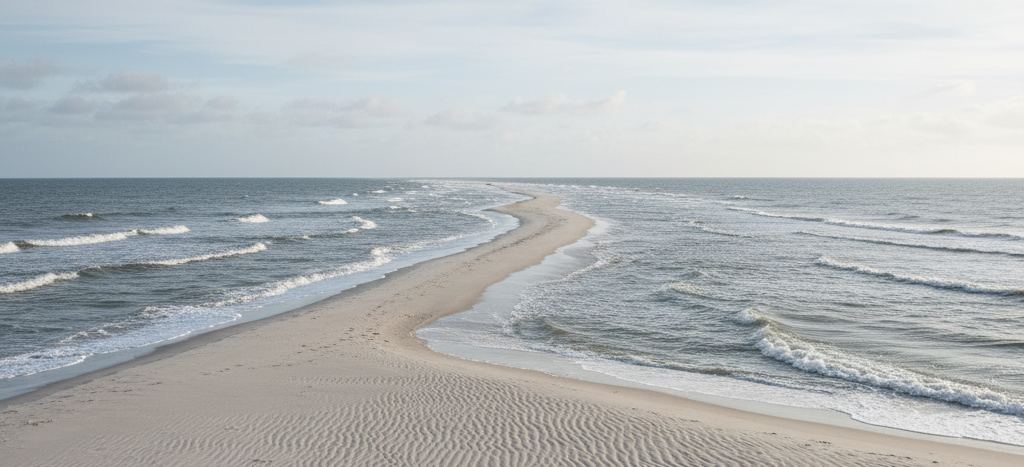
The first base is on the west facing coast, on the North Sea, about an hour from the airport by the inland road. Everything the sand does is inside a twenty minute radius of it. The second is at the top of the peninsula, where the land runs out and two seas arrive at the same beach from opposite sides. Ninety kilometres and about seventy five minutes lie between them. Three nights, then three nights. The move happens on the fourth morning and the accounting is plain: out by ten, drive, buy food on the way because the second town's supermarket sits on the far side of it, key in hand at three in a place where the light is already going at half past. The outdoor half of that day is spent. The sensible version is to watch the forecast and give the driving to the worst day of the week, which is usually possible with two days of notice. What the second base buys is the tip itself at the hours worth having: standing on the sand bar at twenty to nine while the sun comes up over the eastern water, and back on it at half past three while the sun goes into the western. From the first base, that is a day of driving rather than a walk before breakfast.
Sand that is still moving
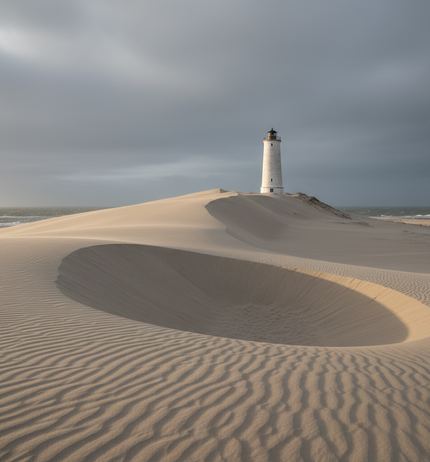
This peninsula is made of loose material that has not finished travelling. Inland from the west coast there is roughly a square kilometre of open sand with nothing growing on it at all, moving about fifteen metres a year towards the north east and doing it since the sixteenth century. The walk in from the road is a kilometre, all of it soft, which in a headwind is genuine work rather than a stroll. Further down the same coast a masonry lighthouse stands on a dune sixty metres above the water. In October 2019 it was lifted and rolled seventy metres inland on rails, because the cliff it had been built safely behind was no longer there. You can stand on the ground it left. Along the same stretch, concrete gun positions poured between 1942 and 1945 appear and disappear. One winter storm takes ten metres off the dune face and uncovers three of them; the next one puts them back under. Nobody manages any of this and almost none of it is marked as a monument. It is simply what this coast does, and it does most of it between November and March, in the months when the car parks are empty.
The car, the crosswind and the salt
The car is a small hatchback, picked up where you land and kept for the full six nights. The roads are good and in January they are empty. Limits are 130 on the motorway, 80 on the country roads and 50 in the towns, and enforcement here is not decorative. Fuel sits around thirteen kroner a litre, near seven dollars a US gallon, and the whole week comes to about four hundred kilometres including the airport runs and the move between bases. Snow is not the problem. It falls, it seldom lies more than a day or two, and the roads are salted before anyone is awake. Wind is the problem. This coast averages something like seven metres a second through January and gusts past twenty on several days a month. Coming out from behind a dune bank onto an exposed stretch, the crosswind arrives all in one piece, and dry sand crosses the surface in long ribbons that look like smoke. Two hands on the wheel, and do not park nose on to the sea unless you enjoy repainting things. Danish law does not require winter tyres. Cars hired this far north generally carry them from November regardless, and the office gets that confirmed in writing before you fly.
Who this suits, and who it plainly does not
It suits people for whom the weather is the event rather than the thing spoiling the event: who will drive twenty minutes to look at a sea state, come in at two, and be genuinely content that the rest of the day is a room, a window and something to read. It suits two people who do not need entertaining separately. And it suits anyone who has stood on a northern European coast in August and found it fully occupied, because in the last week of January the car park at the sand bar holds four cars and your footprints last about an hour. It does not suit anyone who wants to be outdoors from breakfast until dinner, because the daylight will not carry it. It does not suit small children, for that reason with the wind chill on top. It does not suit anyone who expects a village of four hundred people to have a restaurant open on a Tuesday in February; a good many run Thursday to Sunday from November, and the supermarket, open early and late and on Sundays, is the thing you actually plan around. And it does not suit anyone who came for one unpack and one bed. That is what the house shape is for, and it is still there.
Awkward questions about this change
- Can you arrange the flights to Denmark?
- No. This office neither flies nor sails anyone, and no carrier has ever signed anything with it, so the seats are yours to hold and yours to change. What it does instead is build the ground around the times you already have. An evening landing at the northern airport still reaches the first base before the key desk closes; a first departure on the last morning costs you the final walk, and you should know that before you commit to it. Send the flight numbers once they exist and the itinerary is worked backwards from them.
- Why does six nights land so close to the eight night figure?
- Because nights are not what most of the money is buying. Six here starts at $2,270 for two; the eight night house shape starts seventy dollars above that. Per night the two numbers run the other way, about $378 against about $292, and the reasons are dull. Two properties means two arrivals, and an arrival costs the same whether you stay three nights or eight. Rooms on this coast that stay open through January are keeping people in the building for a handful of guests, and the January rate says so. The car, all six nights of it, sits inside both figures.
- Will we see the northern lights?
- Possibly, and this office will not tell you anything beyond that. The aurora does reach fifty seven degrees north, but it wants a strong geomagnetic disturbance, a clear northern horizon and the luck of being awake at the right hour, and the honest expectation for any given January week is that it does not happen. Nobody can sell you a sky. What is dependable is the ordinary thing: a sun that stays under fifteen degrees all day, so when the cloud breaks the low light lasts hours rather than minutes. The cloud does not always break either.
- Could we skip the second base and drive up each day instead?
- You can, and then it is a different trip, which the office will price if you ask for it. One base plus a daily run to the tip is about seventy five minutes each way on quiet roads. In June that is nothing at all. In the week after the solstice it is two and a half hours of a six and three quarter hour day spent behind glass, and you arrive with the sun already low. The point is not that the drive is unpleasant. It is that people consistently underestimate what a return leg removes from the middle of a short day.
- What do we pay Cedar Passage?
- Nothing. There is no deposit, no arrangement fee, and no card details taken or stored here, because the office does not handle your money at any stage of this. The room and the car are settled on the paperwork of the people supplying them, at their own moment, which for winter rooms on this coast is usually on arrival. Afterwards the supplier side pays the office a commission. That is the whole of the arrangement, and it is the reason the office has no stake in talking you into the longer stay or out of it.
Others that move the shape about as far
There is no package on this site that somebody has not already asked for, and the thirty in the book are the requests that came back more than once.
-
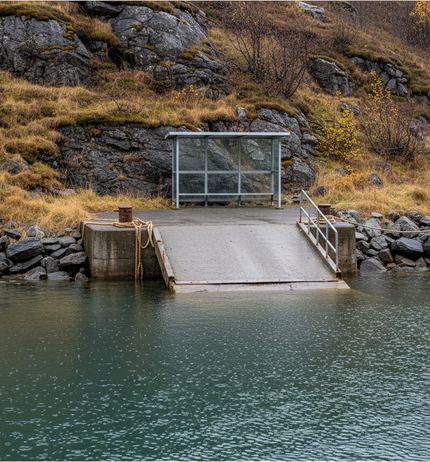
The inner Hardanger
Norway · two bases, ten nights, and boats between them
from $3,620 two sharing two or three parts changed -
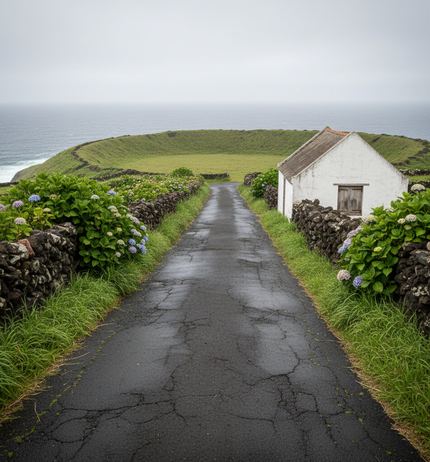
Terceira and the middle islands
Portugal · two bases, twelve nights, no car on one of them
from $3,410 two sharing two or three parts changed -
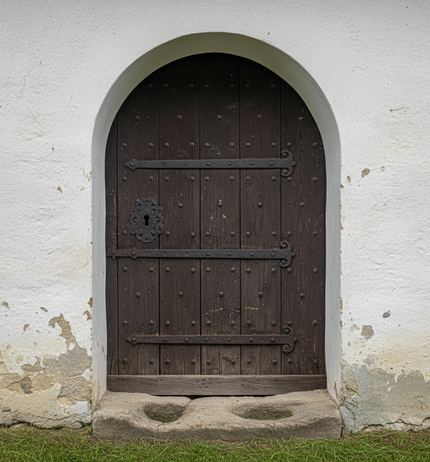
The Saxon villages of Transylvania
Romania · three bases, a driver, and six of you
from $3,060 two sharing two or three parts changed -
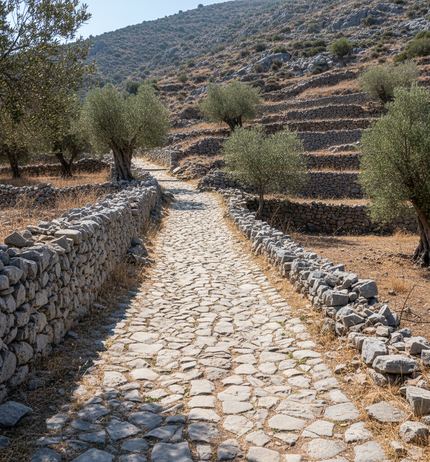
The Mani and the Taygetos wall
Greece · two bases and a walking week between them
from $2,980 two sharing two or three parts changed -
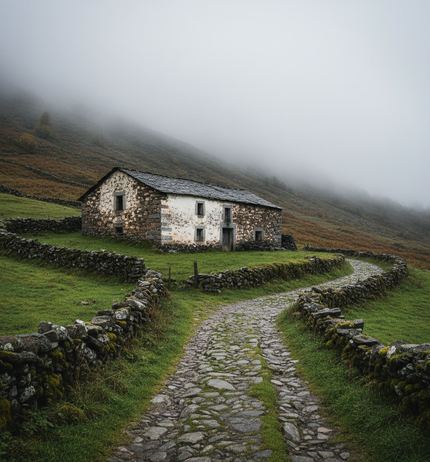
The Basque interior
Spain · two bases, one of them without a road to it
from $3,240 two sharing two or three parts changed -
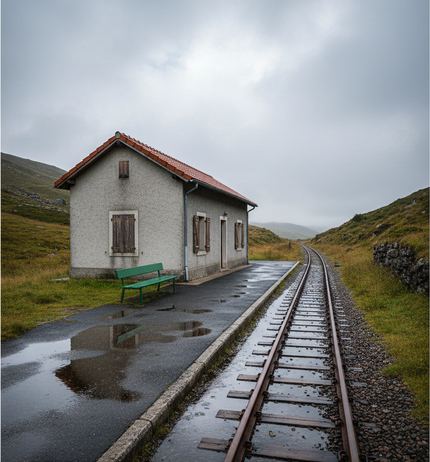
The Bohemian uplands
Czechia · three bases, fourteen nights, trains only
from $3,350 two sharing two or three parts changed -
Kerry and the Dingle peninsula
Ireland · two bases, high summer, five of you
from $3,480 two sharing two or three parts changed -
The Langhe and the high Piedmont
Italy · two bases, twelve nights, harvest weeks only
from $3,720 two sharing two or three parts changed
Ask for this change in writing
Not a cent moves through here. The supplier bills you under its own name, and what this office earns reaches it from that supplier weeks later.